GERD, Heartburn
& Acid Reflux
Why Antacids Keep Failing You
Acid reflux is rarely a "too much acid" problem. It's a system malfunction — and antacids only mask it while making the underlying cause worse over time.
Antacids neutralize acid to mask pain.
The standard approach treats every case of reflux the same way — suppress the acid. But this ignores why the acid is misplaced in the first place.
- Leads to nutrient deficiencies (B12, calcium, magnesium)
- Disrupts natural protein digestion
- Promotes SIBO (Small Intestinal Bacterial Overgrowth)
- Worsens symptoms over time for many causes
Acid reflux is a system malfunction.
There are five distinct causes — each with its own biological origin and solution. The right approach targets your specific cause.
- Requires addressing mechanical roots
- Requires addressing biological roots
- Goal: strategic restoration, not suppression
- Different solutions for different causes
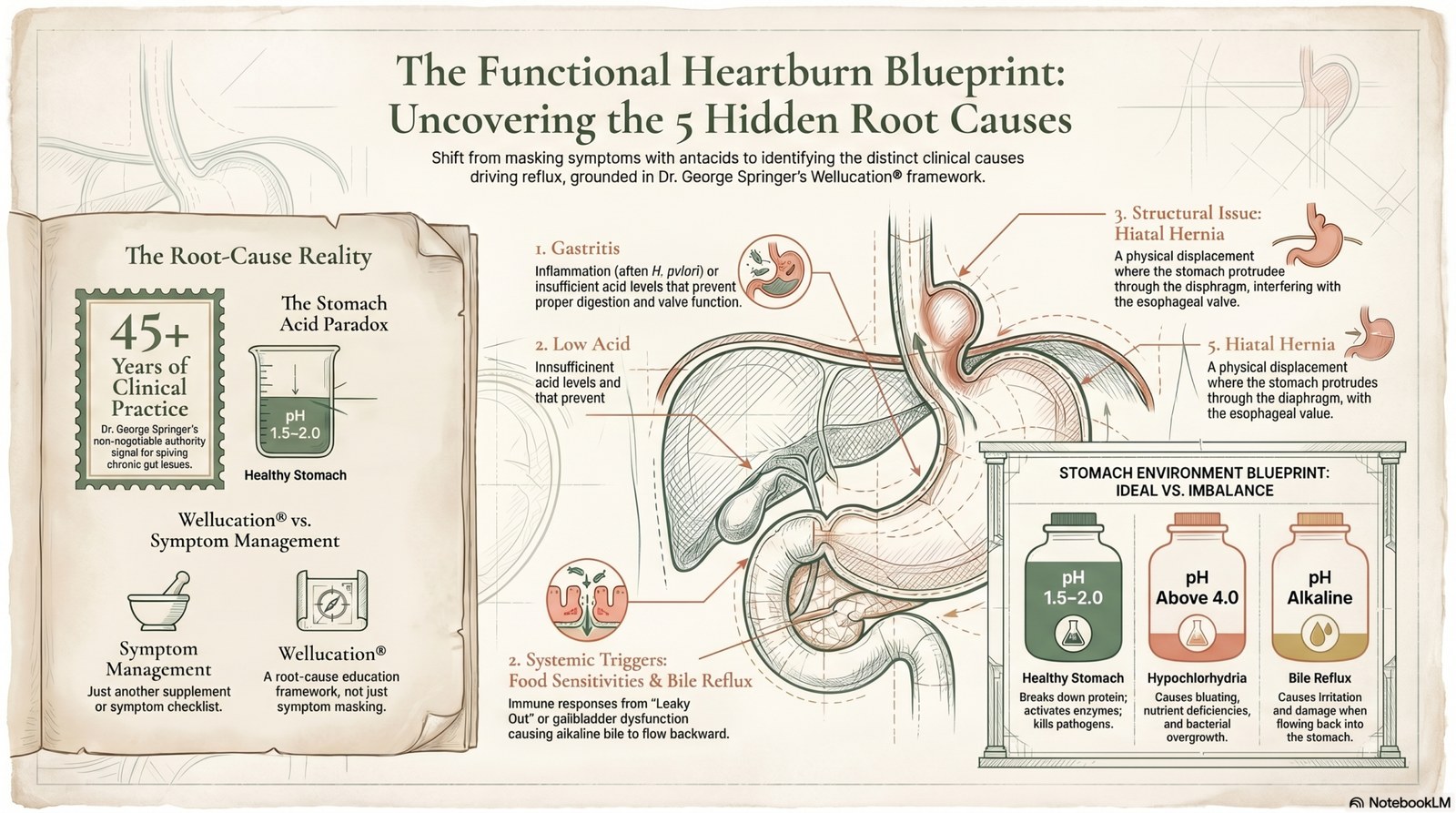
Find Your Root Cause
One symptom — heartburn — can have five entirely different biological origins. Knowing which applies to you is the first step toward lasting relief.
What it is
Gastritis is inflammation of the stomach lining. Much like a sunburn makes skin hypersensitive to heat, an inflamed stomach lining becomes acutely sensitive to acid — even when acid levels are completely normal. This is why antacids provide only temporary relief: they don't address the inflammation itself.
Symptoms
- Persistent heartburn and burning, even between meals
- Extreme fullness after only a few bites of food
- Heaviness in the stomach after eating
- Nausea, sometimes with vomiting
Common causes
- H. pylori bacteria — the most common cause; can cause ulcers if untreated
- NSAIDs & medications — ibuprofen, aspirin, and steroids damage the stomach lining
- Alcohol — erodes the stomach lining over time
- Spicy foods — can irritate an already-inflamed lining
Natural approach
- Avoid stomach irritants for 4 weeks (raw vegetables, citrus, spicy foods, alcohol)
- Aloe vera — soothes and helps heal the stomach lining
- Colloidal silver (paired with aloe) — reduces H. pylori overgrowth
- Once the lining heals, restore healthy stomach acid to prevent recurrence
What it is
Counterintuitively, low stomach acid causes the same burning symptoms as too much acid — and is dramatically worsened by antacids. Without sufficient acid (pH 1.5–2.0), food ferments in the stomach, creating gas and pressure that forces whatever acid is present upward into the esophagus. The result looks exactly like classic acid reflux, but the cause is the opposite.
Symptoms
- Bloating, gas, or belching immediately after meals
- Acid reflux right after eating
- Persistent fullness long after meals
- Undigested food in stools
- Nutrient deficiencies — iron, B12, calcium
- Chronic constipation, weak or peeling fingernails
Common causes
- Aging — acid-producing cells become less efficient over time
- Hypothyroidism — a sluggish thyroid reduces acid production
- Long-term antacid use — PPIs and antacids suppress acid production further
- Poor vagus nerve function — the vagus nerve signals the stomach to produce acid
Self-assessment (baking soda test)
Natural approach
- Avoid drinking large amounts of liquid with meals — it dilutes stomach acid
- Apple cider vinegar before meals can help increase stomach acidity
- Digestive enzymes containing HCl (hydrochloric acid) support proper digestion
- Vitamin B1 and magnesium support vagus nerve function and acid production
- If hypothyroidism is a factor, treating the thyroid is essential
What it is
Food sensitivities cause GERD through an immune mechanism rather than a mechanical one. When the gut lining is compromised (leaky gut), incompletely digested food particles enter the bloodstream and trigger an immune response. This inflammation manifests as GERD, typically appearing an hour or more after eating — long after a mechanical cause would have produced symptoms.
Symptoms
- GERD that occurs 1+ hours after eating
- Acid reflux without other digestive symptoms
- Occasional diarrhea or loose stools
- Abdominal discomfort after specific meals
Common causes
- Leaky gut syndrome — compromised intestinal lining allows immune triggers through
- Antibiotics & medications — damage gut flora and the intestinal lining
- Environmental toxins — glyphosate and other chemicals damage the intestinal lining
- Hard-to-digest foods — lectins, gluten, dairy in susceptible individuals
Natural approach
- Heal the gut lining with specific gut-repair proteins
- Balance digestive enzymes and address yeast or bacterial overgrowth
- Support liver detoxification — an overloaded liver worsens gut-driven inflammation
- Manage cortisol — chronic stress degrades the gut lining
- Elimination diet to identify specific food triggers
What it is
Bile reflux is distinct from acid reflux — it involves bile (produced by the liver, stored in the gallbladder) flowing backward into the stomach and esophagus. Normally, bile flows forward into the small intestine to help digest fats. When the pyloric valve between the stomach and small intestine becomes dysfunctional, bile reverses course. Unlike acid, bile is alkaline — which is why standard acid-blocking medications have zero effect on bile reflux.
Symptoms
- Burning or abdominal pain particularly after fatty meals
- Nausea, sometimes with yellow-green vomit
- Colicky abdominal pain and bloating
- Hoarseness or sore throat in the morning
- Belching and regurgitation
Common causes
- Low stomach acid — impairs the hormones (secretin, cholecystokinin) that regulate the pyloric valve
- Gallbladder surgery — removal causes uncontrolled bile release that may back up
- Gastric ulcers or chronic inflammation — impairs pyloric valve function
Natural approach
- Restore proper stomach acid levels — this regulates the hormones controlling bile release
- Treat underlying gastritis or H. pylori to heal the valve
- Adopt a low-fat diet to reduce bile production and reflux episodes
- Specific supplement protocols to support biliary function
What it is
A hiatal hernia occurs when a portion of the stomach pushes through the diaphragm — the muscle separating the chest from the abdomen — into the chest cavity. This weakens or displaces the lower esophageal sphincter (LES), the valve that normally prevents stomach contents from flowing backward. The result is acid reflux that worsens with position changes: lying down, bending over, or eating large meals.
Symptoms
- Acid reflux significantly worse when lying down or bending over
- Pressure or fullness in the upper abdomen after eating
- Difficulty swallowing
- Heartburn or chest pain
- Regurgitation of food or liquid
Common causes
- Excess abdominal pressure — obesity, pregnancy, or chronic constipation
- Heavy lifting or straining — strenuous physical activity
- Aging — the diaphragm weakens over time
- Chronic coughing — from asthma, smoking, or other respiratory conditions
Natural approach
- Eat smaller, more frequent meals to reduce upward pressure on the diaphragm
- Elevate the head of the bed while sleeping — use gravity to keep acid down
- Avoid eating within 2–3 hours of lying down
- Manual techniques — gentle manipulation can help reposition the stomach
- Avoid heavy lifting or activities that increase abdominal pressure
Find Your True Root Cause
One symptom — heartburn — can have five entirely different biological origins. Use the timing and pattern of your symptoms to identify yours.
| Root Cause | Timing of Discomfort | Key Differentiating Symptoms | Common Triggers |
|---|---|---|---|
Gastritis |
Constant / even with normal acid levels | Nausea, extreme fullness after few bites | H. pylori, NSAIDs, alcohol |
Low Stomach Acid |
Immediately after meals | Bloating, belching, undigested food in stool | Aging, hypothyroidism, PPI overuse |
Food Sensitivities |
1+ hours after eating | Reflux without other digestive symptoms, loose stools | Leaky gut, toxins, hard-to-digest foods |
Bile Reflux |
After fatty meals | Yellow-green vomit, colicky abdominal pain | Pyloric valve failure, gallbladder surgery |
Hiatal Hernia |
When lying down or bending | Pressure in upper abdomen, swallowing difficulty | Heavy lifting, excess abdominal pressure |
Heartburn & GERD
of Stomach Acid
& Solutions
Recommendations
GERD, Heartburn & Acid Reflux — Common Questions
What causes GERD, Heartburn & Acid Reflux?
Can Gastritis cause GERD, Heartburn & Acid Reflux?
Can Low Stomach Acid cause GERD, Heartburn & Acid Reflux?
Can Food Sensitivities cause GERD, Heartburn & Acid Reflux?
Can Bile Reflux cause GERD, Heartburn & Acid Reflux?
Can Hiatal Hernia cause GERD, Heartburn & Acid Reflux?
Choose Your Path Forward
Every journey to gut health looks different. Here's how to start in exactly the right place for you.